- solar panel cleaning
- pretoria solar
- solar maintenance
- efficiency
- research
How Much Energy Are Dirty Solar Panels Losing You? Research-Backed Reasons to Clean Them
Dust and soiling can cut solar output by 10-40% in Gauteng. Research and field pilots show what regular professional cleaning recovers for Pretoria homeowners.
Izak vN
Operations Director & Founder
· Updated · 3 min read
In the Highveld's sunny but dusty conditions, your solar panels work hard to cut your electricity bills and support load-shedding resilience. But over time, dust, pollen, bird droppings, and pollution build up, quietly robbing your system of its full potential.
We clean with RO/DI purified water and non-abrasive tools across Pretoria and greater Gauteng. The research below matches what we see on roofs after a proper wash.
The Hidden Cost of Soiling: What the Research Says
Solar panels lose efficiency when dirt blocks sunlight from reaching the photovoltaic cells. The impact is significant and well-documented:
- Typical losses: Dust accumulation commonly reduces output by 10–40%, depending on exposure time, dust density, and local conditions. In high-soiling areas, losses can exceed 40–50% over weeks or months. Source
- Africa-specific challenges: Our region faces some of the highest sand and dust accumulation globally. Studies highlight how polycrystalline panels (common in many installations) suffer greater declines, up to 30% power loss in dusty tests compared to cleaner monocrystalline ones. Source
- Daily impact: Even a thin layer can cut production by over 10%. In one pilot, uncleaned panels consistently underperformed daily-cleaned ones by a wide margin. Source
For Pretoria homeowners, Highveld dust, seasonal pollen, and urban pollution mean these losses add up quickly. That shortens the payback period on the system you already paid for.
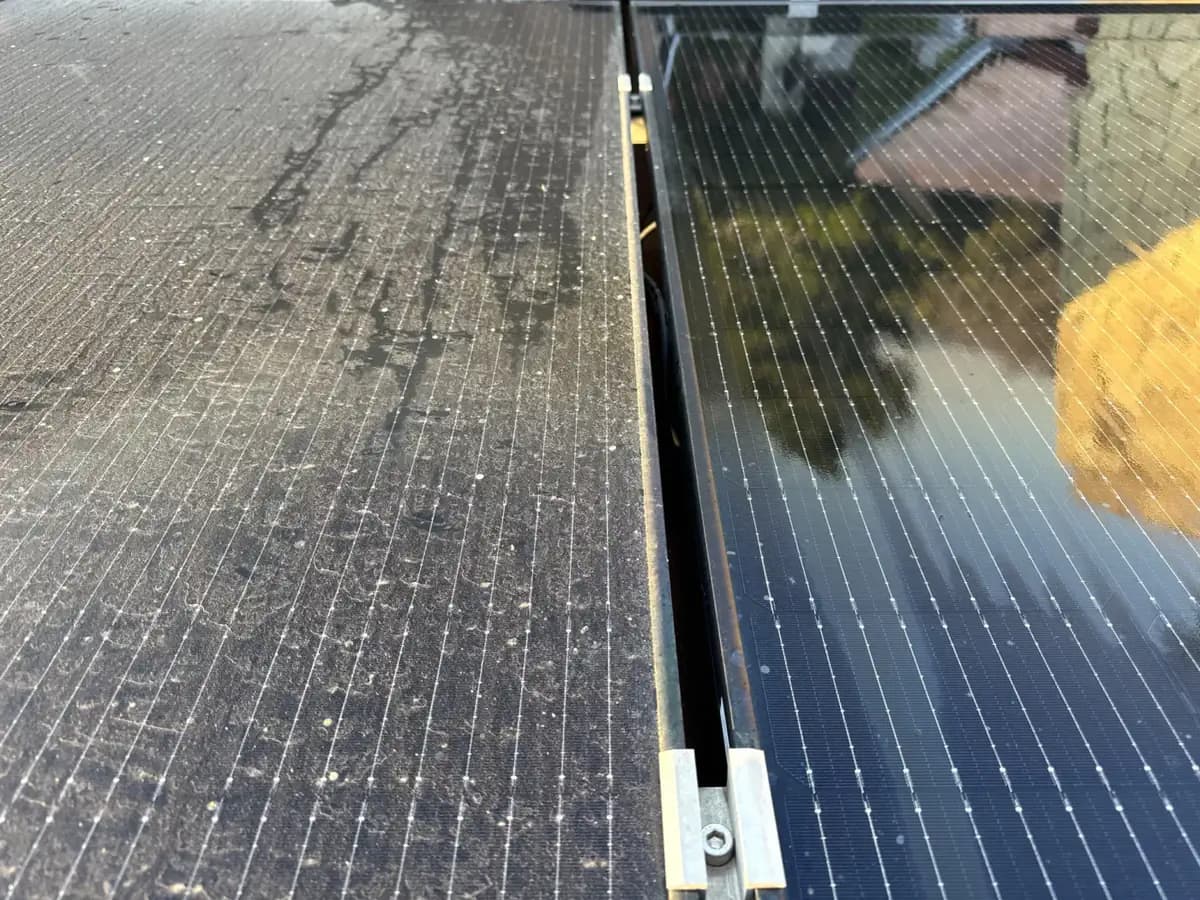
Visual proof: the difference is striking:

Real-World Case Studies: Proven Gains from Cleaning
Numbers from independent pilots and commercial deployments confirm what we see on rooftops across Gauteng:
- 18% average daily energy boost: In a dusty commercial pilot, autonomous daily cleaning delivered 15–20% higher output versus an identical uncleaned control string. This translated to substantial annual revenue gains (e.g., ~R100,000+ equivalent for larger systems) and a strong ROI on maintenance solutions. Source
- Chemitek Solar field results:
- Malaysia plant (850 kWp): +2.78% performance after professional treatment, with excellent ROI.
- India installation: +5.15% improvement despite industrial grease and dust.
- Other sites showed 4–40% recovery depending on soiling severity (e.g., cement dust cases). Source
- Additional benefits: Reduced labour, lower water usage (up to 73% savings with efficient methods), and less need for risky DIY ladder work.
On our jobs that tracks as measurable efficiency recovery and streak-free glass you can see from the ground.
DIY vs Professional: Why Expertise Wins in Gauteng
Many homeowners try cleaning themselves. On Gauteng roofs the gaps show up quickly. Heights need training, harnesses, and insurance. Tap water leaves mineral spots; RO/DI does not. Soft brushes and controlled flow protect coatings while lifting stuck dirt. A scheduled plan then keeps output up without another DIY scramble every few months.
Regular professional cleaning restores output and helps extend panel life by limiting hotspots and embedded grime.
Get a clearer picture of your own array
In Pretoria’s conditions, proactive maintenance typically pays for itself through higher energy production and lower long-term costs.
Get an instant indicative price or contact us. Many clients also bundle window or glass cleaning on the same visit. Recurring plans add priority booking and lower rates from visit 2.
References
- Assessing the Effects of Dust on Solar Panel Performance – Engineering Proceedings
- A Review on Solar Panel Cleaning Systems and Techniques – Energies Journal
- Solaris Hydrobotics Case Studies & Pilot
- Chemitek Solar Performance Case Studies