- solar panel cleaning Pretoria
- solar myths
- RO DI water
- Highveld solar
- professional solar cleaning
5 Common Myths About Solar Panel Cleaning in Pretoria (Debunked)
Rain cleans them. Soap is fine. Once a year is enough. Here are five common myths about solar panel cleaning in Pretoria and what actually works on the Highveld.
Riaan L
Marketing Director & Co-Founder
· 3 min read
Solar panels look simple from the ground. A bit of rain, a hose, some soap, and they should be fine. Right?
Not quite. On the Highveld, dust, pollen, bird droppings and light rain create conditions that many common beliefs do not account for. Here are five myths we hear often in Pretoria and Gauteng, and what actually happens.
Myth 1: Rain cleans your solar panels
Rain can wash away some loose dust. It rarely removes the film that sticks to the glass.
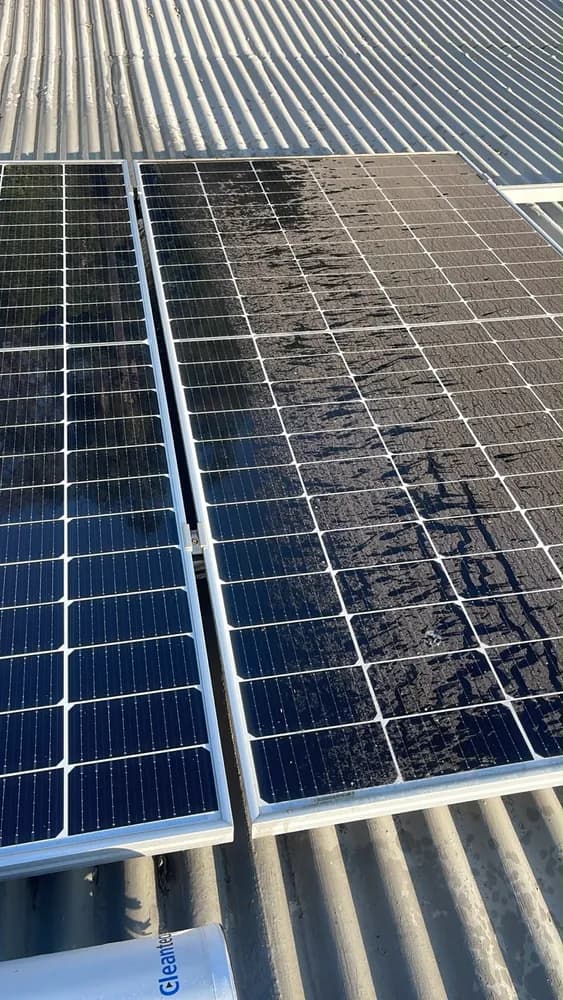
On the Highveld, rain often mixes with dust and leaves a thin residue as it dries. Bird droppings and pollen stay put. The result is a panel that looks slightly better from the street but still loses light.
A proper clean with purified water and soft tools removes what rain leaves behind.
Myth 2: Dishwashing liquid or window cleaner is fine
Household products can make glass look shiny while reducing the amount of light that gets through.
A University of Turku study found that dishwashing detergent left solar glass transmitting less light than dirty glass, even after rinsing. Anti-reflective coatings are designed for light, not for kitchen soap.
Pure RO/DI water and soft brushes avoid that problem.
Myth 3: Once a year is enough
In many climates, once a year can work. In Gauteng, dust builds quickly, especially through winter and early spring.
We regularly measure 10% to 30% gains after a clean on systems that have gone several months without attention. Waiting a full year often means months of reduced output before the next clean.
Quarterly or twice-yearly plans keep performance more consistent.
Myth 4: A hose from the ground is good enough
A hose can rinse the surface. It does not scrub stuck dirt, and ordinary tap water leaves mineral spots as it dries.
From the ground you also miss issues that affect performance or safety: cracks, hot spots, rust, nesting, or shading that has appeared since the last visit.
A trained crew with the right water and tools does both the clean and the check.
Myth 5: Clean-looking means performing well
A panel can look acceptable from the driveway and still carry a film that reduces output.
Before-and-after photos are useful. Measured results are better. We record output before and after the clean (with irradiance taken into account) and report the actual numbers, not a fixed percentage.
Typical measured gains on systems we have cleaned fall between 10% and 30%, depending on how dirty the panels were.
Quick Guide
| Situation | Better choice |
|---|---|
| Light dust after rain | Soft rinse with demineralised water, or wait for a professional clean |
| Heavy soiling, bird droppings, or long interval | Professional clean |
| You want proof of improvement | Performance measurement and report |
| Steep or multi-storey roof | Trained, insured crew |
What Actually Works
Professional cleaning with purified RO/DI water, soft tools, and a proper inspection gives you two things: restored light transmission and a clear record of condition and performance.
It is not about making the job complicated. It is about doing the part that affects output and safety properly, so your panels keep earning.
Want to see what a clean would do for your system?
Get an instant indicative price or contact us to book a visit. Maintenance plans are available if you prefer regular service.